The $600 Billion Wake-Up Call
On January 27, 2025, Nvidia lost over $600 billion in market capitalization in a single day — the largest one-company decline in U.S. stock market history. The trigger wasn’t a product failure, a regulatory crackdown, or an earnings miss. It was a research paper from a Chinese AI startup called DeepSeek.
DeepSeek had just demonstrated that you could build AI models competitive with the best in the world using a fraction of the compute that OpenAI, Google, and Meta rely on. The message was clear: the trillion-dollar GPU arms race that had been fueling Nvidia’s meteoric rise might not be as necessary as everyone assumed.
This isn’t just a story about stock prices. It’s about a fundamental shift in how AI gets built, who can afford to build it, and what it means for every business that’s been watching from the sidelines. If you’re a CTO evaluating AI strategy, an investor reassessing positions, or a business leader wondering when AI will actually be affordable — this is the inflection point you’ve been waiting for.
What Is DeepSeek?
DeepSeek is a Chinese AI startup founded by Liang Wenfeng, a hedge fund manager turned AI researcher. Backed by High-Flyer Capital, a quantitative trading firm, DeepSeek had the financial resources to pursue ambitious AI research — but deliberately chose to do it differently from the Silicon Valley playbook.
From Underdog to Disruptor
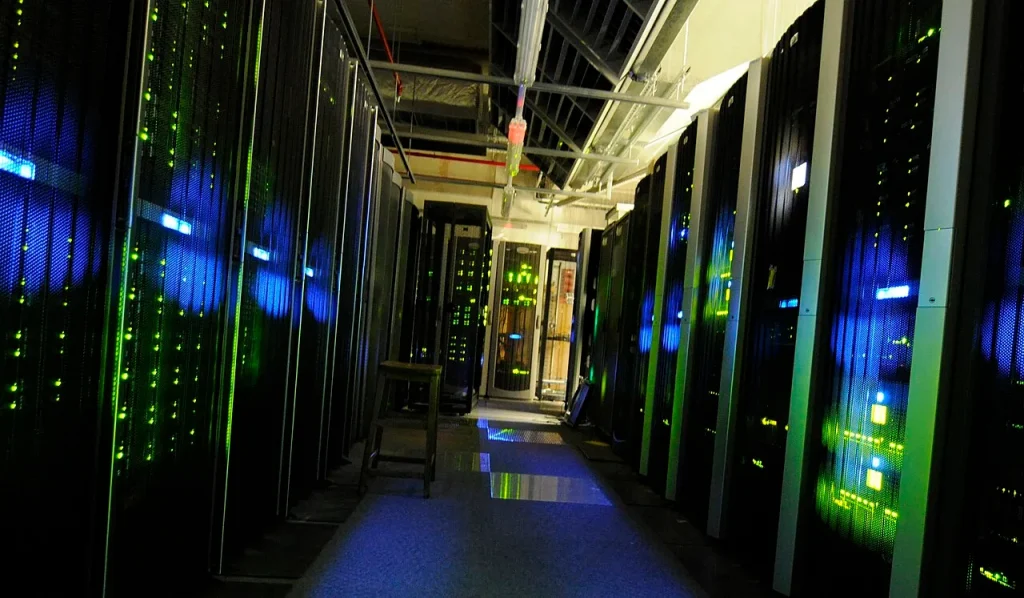
While OpenAI, Google, and Meta were spending billions on GPU clusters numbering in the hundreds of thousands, DeepSeek worked with roughly 2,000 lower-end Nvidia H800 GPUs — chips that were already restricted under U.S. export controls and represented a fraction of the compute power their Western competitors enjoyed.
The constraint became the catalyst. Forced to do more with less, DeepSeek’s team engineered solutions that the well-resourced incumbents had no incentive to pursue. The result was DeepSeek-V3 and DeepSeek-R1 — models that matched or exceeded GPT-4 and Claude 3.5 on key benchmarks, built with an estimated training cost of just $10 million and a team of fewer than 200 engineers, in roughly two months.
The “Sputnik Moment for AI”
Marc Andreessen called DeepSeek’s breakthrough a “Sputnik moment for AI” — and the analogy holds. Like the Soviet satellite launch that shocked the U.S. into accelerating its space program, DeepSeek forced the entire AI industry to confront an uncomfortable possibility: the path to powerful AI might not require the massive infrastructure investments that had been treated as gospel.
The impact was immediate. Tech stocks, particularly semiconductor companies, sold off sharply. Nvidia’s single-day $600B+ loss was accompanied by significant declines in AMD, ASML, TSMC, and other companies in the AI hardware supply chain. The question echoing through boardrooms was simple: if you can build world-class AI on commodity hardware, what happens to the companies selling premium hardware?
How DeepSeek Built a Competitive Model for Pennies
DeepSeek’s technical innovations aren’t incremental tweaks. They represent a fundamentally different approach to building large language models — one that prioritizes efficiency over brute-force scale.
Mixture-of-Experts Architecture
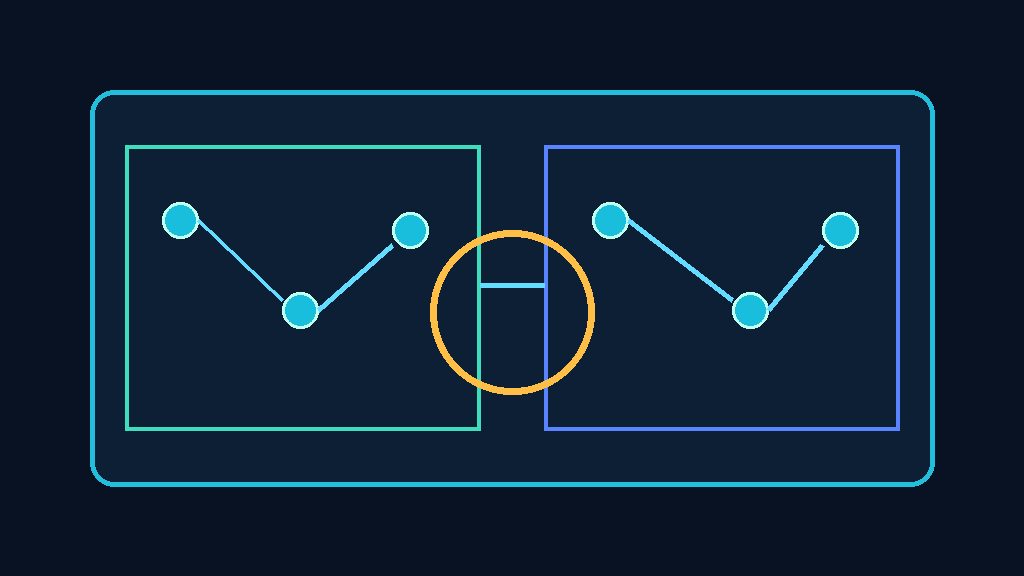
DeepSeek-V3 uses a Mixture-of-Experts (MoE) architecture with 671 billion total parameters — but here’s the critical detail: only 37 billion parameters activate for any given task. That’s roughly 5.5% of the model’s total capacity.
Think of it this way: instead of firing every cylinder in a massive engine every time you need to move, MoE activates only the specialist components relevant to the current task. A coding question routes to the “code expert.” A math problem routes to the “reasoning expert.” The rest of the model stays dormant.
This architecture dramatically reduces both training and inference costs. You get the capacity of a 671B-parameter model with the compute requirements of something much smaller. It’s why DeepSeek could train on 2,000 GPUs what OpenAI trains on hundreds of thousands.
Pure Reinforcement Learning — No Labeled Data Needed
Perhaps DeepSeek’s most radical innovation is in how it trains reasoning capabilities. Traditional AI development relies on supervised learning — humans manually labeling data to teach the model what “good” looks like. This process is expensive, slow, and creates bottlenecks.
DeepSeek-R1 uses pure reinforcement learning (RL) for reasoning. Instead of feeding the model labeled examples of correct reasoning, DeepSeek set up reward functions that incentivize the model to arrive at correct answers through logical steps. The model essentially teaches itself to reason, discovering effective strategies through trial and error.
The result: DeepSeek-R1 achieves reasoning performance comparable to OpenAI’s o1 model — without the massive human annotation pipeline that OpenAI relies on. This isn’t just a cost saving. It’s a philosophical shift. The model learns reasoning organically rather than being explicitly taught, which may actually produce more robust and generalizable reasoning capabilities.
Quantization: Doing More with Less Memory
DeepSeek employs aggressive quantization techniques that compress model parameters from 32-bit floating-point numbers to 8-bit — a 75% reduction in memory requirements.
In practical terms, this means the model can run on significantly cheaper hardware. Where a conventional 671B-parameter model might require a cluster of high-end GPUs just to load into memory, DeepSeek’s quantized model can be served on far more modest infrastructure.
This isn’t lossless compression — there are trade-offs in precision. But DeepSeek’s engineering team demonstrated that these trade-offs are minimal for real-world performance. The model retains its competitive accuracy while costing a fraction to deploy.
Multi-Head Latent Attention and 128K Context
DeepSeek also introduced Multi-Head Latent Attention (MLA), a technique that reduces the memory cost of the key-value cache during inference — often the bottleneck for serving large models. Combined with a 128,000-token context window, DeepSeek models can process and reason over documents far longer than what most competing models can handle.
For businesses, this matters. It means you can feed entire contracts, research papers, or codebases into the model and get coherent, context-aware responses — without paying for the premium infrastructure that such capabilities usually require.
What This Means for the GPU Arms Race
The Diminishing Returns of Compute Scaling
MIT research has been pointing in this direction for some time: massive, compute-intensive AI models are hitting diminishing returns. The improvements from simply making models bigger — more parameters, more training data, more GPU hours — are flattening. Meanwhile, smaller, more efficiently designed models are showing rapid improvement curves.
DeepSeek is the most dramatic proof of this trend. When a team with 2,000 restricted GPUs can match the output of companies spending billions on compute, the assumptions underlying the GPU arms race start to look fragile.
This doesn’t mean GPUs are irrelevant. Training and running AI models will continue to require significant compute. But it does mean that the relationship between GPU spend and model quality isn’t linear — and companies betting billions on that linear relationship may be in for a correction.
Nvidia’s $600 Billion Lesson
Nvidia’s stock decline wasn’t irrational. The market was pricing in a scenario where AI demand required ever-increasing GPU density — and DeepSeek challenged that scenario head-on.
Consider the math: if the next generation of competitive AI models can be trained on 2,000 GPUs instead of 100,000, the total addressable market for high-end AI chips shrinks significantly. Nvidia’s premium pricing depends on the perception that only their most powerful hardware can produce state-of-the-art results. DeepSeek proved otherwise.
Nvidia will remain a dominant player — AI infrastructure isn’t going away. But the narrative has shifted from “you need the most expensive hardware to compete” to “you need the smartest approach to compete.” That’s a fundamental change in how the market values GPU companies.
Open Source Changes Everything
DeepSeek released its models as open weights. Anyone can download, study, modify, and build upon them. This is arguably more disruptive than the technical achievements themselves.
When only OpenAI and Google could build frontier models, the AI industry looked like an oligopoly — a small number of well-capitalized players controlling access to the most powerful technology. DeepSeek’s open-source release demolished that barrier.
Now, any startup, university, or enterprise can start with DeepSeek’s foundation and build specialized models for their domain — at a fraction of what it would have cost to train from scratch. The downstream effects are enormous:
- Lower barriers to entry for AI startups
- Reduced vendor lock-in for enterprises
- Faster innovation cycles as the community iterates on open foundations
- Price compression as competition increases
For businesses evaluating AI adoption, this means the cost of getting started just dropped by orders of magnitude. You don’t need a multi-million dollar compute budget or a partnership with OpenAI. You need a clear problem, a competent engineering team, and an efficient model to fine-tune.
What This Means for Businesses Adopting AI
AI Just Got Affordable for Everyone
The practical implication is straightforward: AI capabilities that were previously available only to well-funded enterprises are now accessible to mid-market companies and even small businesses.
Before DeepSeek, deploying a frontier-quality AI model meant either paying premium API prices to OpenAI or Anthropic, or investing in a GPU cluster that cost millions. After DeepSeek, you can deploy a competitive model on commodity cloud infrastructure for a fraction of the cost.
This changes the ROI calculus dramatically. Projects that didn’t make financial sense at $500K in compute costs suddenly look attractive at $50K. Use cases that were marginal at enterprise API pricing become no-brainers when you can run the model yourself affordably.
Strategy Shifts for CTOs
For technology leaders, DeepSeek’s disruption creates both opportunity and urgency:
Reevaluate your AI infrastructure costs. If you’re spending heavily on GPU-heavy API calls or cloud AI services, it’s time to benchmark open-source alternatives. The cost differential is now significant enough to warrant a serious evaluation.
Prioritize efficiency over scale. The lesson of DeepSeek is that architectural innovation beats brute-force scaling. When selecting AI tools or building custom solutions, favor approaches that emphasize efficient compute usage.
Build for flexibility. The AI landscape is shifting rapidly. Avoid deep vendor lock-in. Open-source models give you the freedom to switch, customize, and optimize — use that flexibility.
Start now, iterate fast. The cost of experimentation has dropped dramatically. Instead of waiting for the “perfect” AI strategy, start with small, low-risk projects using efficient open-source models, and iterate based on results.
Looking Ahead: DeepSeek V4 and the Future of AI
DeepSeek has announced that DeepSeek V4 is coming in 2026, and early signals suggest further improvements in efficiency and capability. If the trajectory continues — better models at lower costs — the pressure on compute-heavy incumbents will only intensify.
But the bigger story isn’t about any single company. It’s about the trajectory of the entire industry:
- Efficiency is the new frontier. The next wave of AI breakthroughs will come from smarter architectures, not bigger GPU clusters.
- Open source is accelerating. DeepSeek proved that open models can match proprietary ones. The community will build on this.
- The GPU market is restructuring. Demand won’t disappear, but the premium on the most expensive hardware will compress.
- AI accessibility is expanding. As costs drop, adoption accelerates. This is the real revolution.
For businesses, the message is clear: the economics of AI have fundamentally changed. What was once a game only the richest players could afford is now open to everyone.
Frequently Asked Questions
Is DeepSeek really as good as GPT-4 or Claude?
DeepSeek-V3 benchmarks competitively with GPT-4 on many reasoning and coding tasks, particularly in math and code generation. However, “as good” depends on your use case. For enterprise deployments where cost efficiency matters, DeepSeek offers comparable performance at a fraction of the cost. For specialized tasks requiring broad general knowledge or complex multi-step reasoning, GPT-4 and Claude still hold edges in certain areas. The key insight: you no longer need to pay premium prices for 90% of AI tasks.
Why did Nvidia stock drop so much after DeepSeek’s release?
Nvidia lost nearly $600 billion in market cap in a single day — the largest one-day loss for any company in history. The market reacted to DeepSeek’s proof that competitive AI models can be trained for under $6 million using older GPUs, directly challenging the narrative that AI advancement requires ever-more-expensive hardware. This doesn’t mean GPU demand disappears, but it does mean the growth assumptions baked into chip stocks needed recalibration.
Can businesses actually use DeepSeek in production?
Yes — and many already are. DeepSeek is open-source (MIT license for V3), meaning you can self-host it, modify it, and integrate it into your stack without vendor lock-in. Companies in Vietnam and Southeast Asia are deploying it for customer service automation, document processing, and content generation at costs 10-50x lower than equivalent OpenAI deployments. The main considerations are: infrastructure for hosting, fine-tuning for your domain, and compliance requirements for your industry.
What does DeepSeek mean for AI adoption in Vietnam and Southeast Asia?
It’s transformative. Previously, only companies with large budgets could afford enterprise AI. DeepSeek’s cost efficiency — combined with its open-source availability — means Vietnamese startups, SMEs, and even solo entrepreneurs can now deploy production-grade AI systems. This democratization is exactly what drives broader adoption: when AI costs drop 10-50x, the ROI equation changes fundamentally for businesses that previously couldn’t justify the investment.
Should I invest in AI stocks after the DeepSeek shock?
This article is not financial advice. But the structural insight is clear: AI value is shifting from hardware to software and services. Companies building on top of AI (automation platforms, AI agents, industry-specific solutions) may benefit more than pure hardware plays. The DeepSeek disruption suggests that the “picks and shovels” thesis for GPU makers needs nuance — efficiency improvements can reduce hardware demand growth even as AI usage explodes.
How does DeepSeek compare to other open-source LLMs?
DeepSeek-V3 stands out for its training efficiency and performance-to-cost ratio. Compared to Llama 3, Mistral, and other open models, DeepSeek achieves competitive or superior benchmarks — especially in mathematical reasoning and code generation — while using significantly less compute for training. Its mixture-of-experts (MoE) architecture activates only a fraction of parameters per token, reducing inference costs dramatically. For practical deployment: if you need strong reasoning at low cost, DeepSeek should be on your short list.
Conclusion
DeepSeek didn’t just build a good AI model — it proved that the entire industry’s assumptions about what AI “should” cost were wrong. A team of fewer than 200 engineers, working with restricted hardware for $10 million in two months, produced results that sent shockwaves through a trillion-dollar market.
The implications are still unfolding. Nvidia and other GPU companies will adapt. OpenAI and Anthropic will respond with their own efficiency improvements. The market will find a new equilibrium. But the genie is out of the bottle: efficient, open, affordable AI is here to stay.
For businesses, this is the moment to act. The cost of deploying powerful AI has dropped by an order of magnitude. The barrier to entry has collapsed. The question is no longer “Can we afford AI?” — it’s “Can we afford not to adopt it now?”
Ready to put efficient AI to work for your business? Agoobi helps companies design, deploy, and optimize AI automation — without the billion-dollar compute budget. Book a consultation and discover how the cost revolution can work for you.
Related reading:
- AI Coding Agents in 2026 — how AI agents are transforming software development
- How Multi-Agent Systems Work — architecture patterns for building AI agent teams